

RESEARCH THRUSTS
Human-Robot Interaction
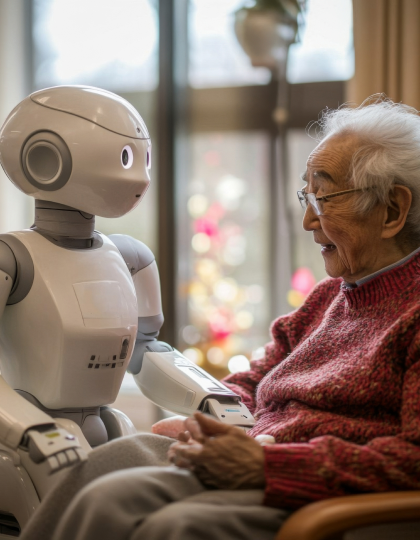
Human-robot interaction is the study and design of interactions between humans and robots. It focuses on how people communicate and collaborate with robots, and aims to improve the effectiveness, usability, and acceptance of robotic systems in various contexts, thereby maximizing the benefits of robotic technology in everyday life.
The older population presents unique challenges to human-robot interaction. Empirical studies indicate that responses to various robot types differ among older adults. In addition, older users may experience “technology fatigue”, leading them to perceive technology as unhelpful in their daily lives. This scenario underscores the importance of adopting a socially contextualized approach, as older adults typically engage with multiple stakeholders, such as caregivers, relatives, and friends, on whom they rely for different types of support. Identifying the appropriate role for robots within these social and support networks is critical for enabling effective interaction modes and determining suitable levels of assistance. Furthermore, cultural differences regarding support networks, such as those observed between Eastern and Western societies, suggest that interaction modes and levels of assistance will vary based on the user's background and the geographical context of robot deployment. Lastly, ethical issues must be thoroughly considered to ensure privacy and safety, as well as to foster trust, acceptance, and engagement.
Human-robot interaction thrust aims to investigate and enhance the interactions between robots and end users within the context of geriatric care. Specifically, we will investigate 1) the needs and expectations of older adults and caregivers, 2) the discrepancies between users’ needs and expectations and solutions provided by current technologies, 3) factors related to human, product, and community/infrastructure that can improve user trust, acceptance, engagement, and well-being, and 4) the long-term care practices and the social acceptability of robots to ensure better integration of robots into real-world contexts. We will employ comprehensive qualitative and quantitative methodologies to explore the relationships among older adults, care networks, and robotic systems. The insights gained from this research will inform the design of geriatric care robots and enhance care infrastructure and regulatory frameworks.